A Woman Who Walked Away
Once upon a time, in a kingdom where the winters were long and the people spoke of duty more often than joy, there lived a little girl who admired all the wrong things.
She admired distant mountains, storms, wolves, dragons and gargoyles. Most of all, she admired a prince who lived in a tower full of books.
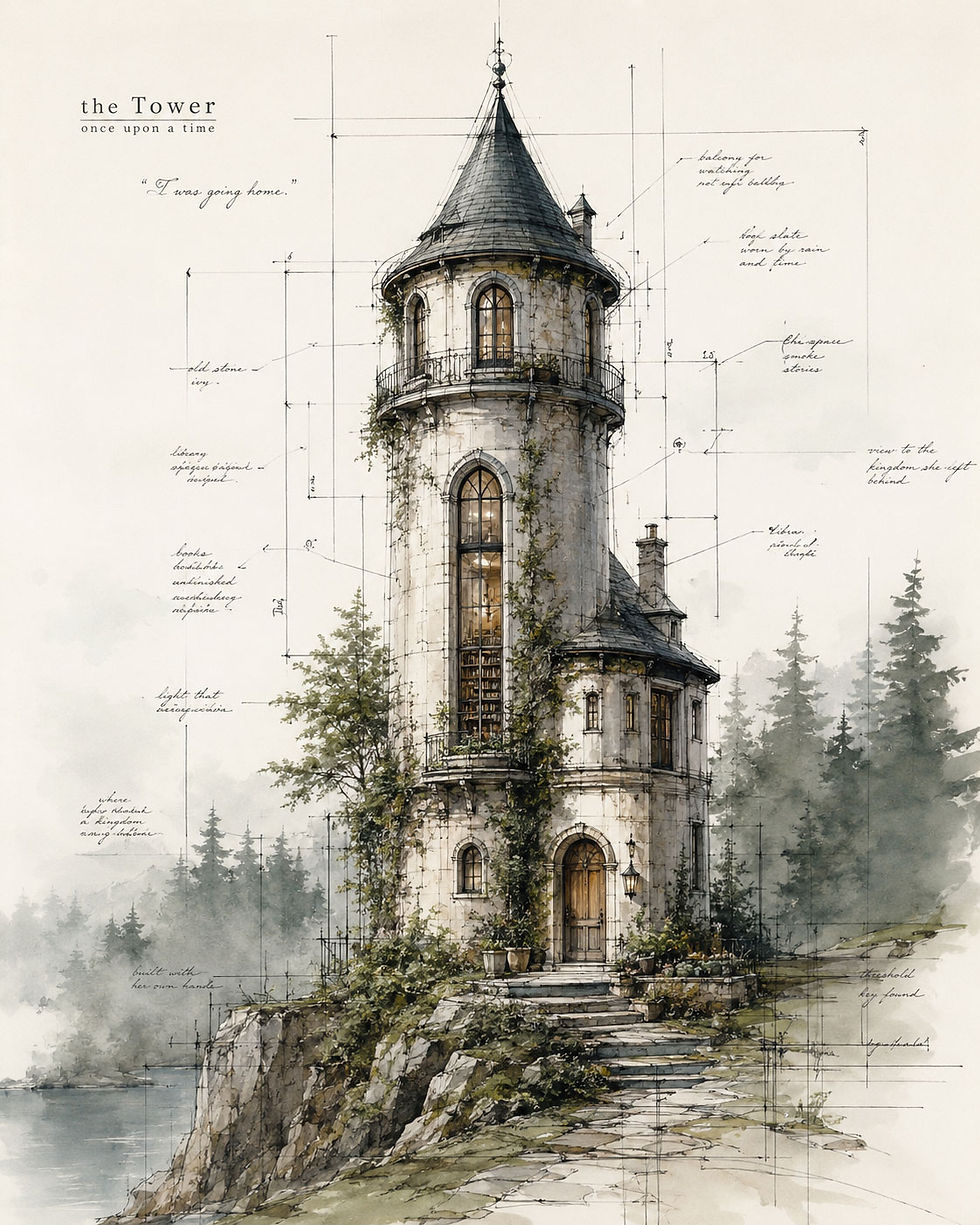
The prince was older, taller, wiser, and knew the names of many things. The little girl watched him the way flowers watch the sun.
"If I become clever," she thought, "perhaps he will see me." So she became clever.
"If I become brave," she thought, "perhaps he will see me." So she became brave.
"If I learn the games he loves, perhaps he will see me." So she learned them.
She crossed muddy fields. She read difficult books. She chased impossible dreams. And all the while she glanced toward the tower. But the prince rarely looked down.
Years passed. The little girl became a young woman. The kingdom expected her to settle into the life prepared for her. There were rules and expectations to follow. There were carefully drawn maps showing where she ought to go and who she ought to become. But whenever she followed those maps, she felt as though she were wearing somebody else's skin. So she began to wander. She wandered to rivers. She wandered to forests. She wandered to places where the roads disappeared and the boundaries between things became soft. The villagers worried. "You must choose where you belong," they told her. But she could not. The forest belonged to her. The river belonged to her. The mist belonged to her. The threshold between one thing and another belonged to her. And she belonged to them. Yet still she glanced back toward the tower. Not often. But often enough. For she still hoped that one day the prince would call her name.
One year she brought him a basket of achievements.
Another year she brought him a handful of successes.
Another year she brought him courage.
Another year she brought him sacrifice.
Another year she brought him proof.
The prince accepted none of them. Or perhaps he never noticed they had been offered at all.
The young woman could not decide which possibility hurt more.

So she kept walking.
She crossed a sea.
She crossed a language.
She crossed a life.
She built things with her own hands.
She made beauty where there had once been emptiness.
She survived storms that would have broken lesser travellers.
Still, on certain evenings, she would glance back toward the old kingdom and wonder: "What did I do wrong?" The question followed her for many years.
Then, one autumn afternoon, she met an old dragon beside a river. The dragon was missing several teeth and looked as though he had not frightened anybody properly in decades.
"You seem troubled," said the dragon.
"I would like an answer," said the woman.
"To which question?"
She thought for a moment. Then she replied:
"Why was I never enough?"
The dragon considered this. Then he burst out laughing. It was a terrible laugh, full of smoke and wheezing. At last he said:
"Little human, you have spent your life asking the wrong question."
The woman frowned.
"What is the right question?"
The dragon lowered his great head.
"Why did you appoint him judge?"
The forest grew silent. The river stopped chattering. Even the wind seemed to pause. The woman stood very still. For in all her years she had never considered this. The prince had never declared himself judge. The kingdom had never held a ceremony. No dragon had issued a decree. A little girl had simply decided that he was. And from that moment onward she had spent half her life trying to earn a verdict.
The dragon sighed.
"Children do this all the time."
The woman sat beside the river until sunset. And then until moonrise. And then until dawn. At sunrise she reached into her pocket and found a key. It was old and worn. Curiously, it fit no lock she had ever seen.
"What's this?" she asked.
"The key to your kingdom," said the dragon.
"I don't have a kingdom."
The dragon smiled.
"That is because you keep staring at somebody else's."

The woman turned around. And there it was. All around her. A kingdom of rivers and books. A kingdom of smells and stories. A kingdom of coffee and laughter. A kingdom of strange ideas and second chances. A kingdom full of creatures that others had overlooked. There were old dogs sleeping in patches of sunlight. There were stubborn flowers growing through cracks in stone. There were people carrying broken hearts and hopeful dreams. There was beauty everywhere.
"What about the prince?" she asked quietly.
The dragon looked toward the distant tower. "He remains exactly where he always was."
The woman waited for the familiar ache. But it did not come. Instead, she felt a release. She nodded. "Then I wish him well."
The dragon smiled. "As do I."
And that was the end of the matter.
Years later travellers would occasionally discover a curious little kingdom at the edge of a forest. There they would find a woman tending flowers, telling stories, and being followed by an increasingly ridiculous number of rescue bulldogs.
"Why did you leave?" the travellers would ask.
And she would smile.
"I wasn't leaving."
Then she would look toward the trees, the river, the dogs, the flowers, the life she had built with her own hands. And she would say:
"I was going home."
And she lived happily ever after.
Not every question was answered, and not every wound disappeared, but she finally stopped asking permission to belong.
With all my love to all the women who have been carrying the world on their shoulders for a bit too long. Women who had to look for grains in the ashes too many times. Women who spent years making shirts out of nettles before finally giving themselves permission to breathe and to belong.
I salute you.Eva x
Founder, Lady Boss and Head Dreamer
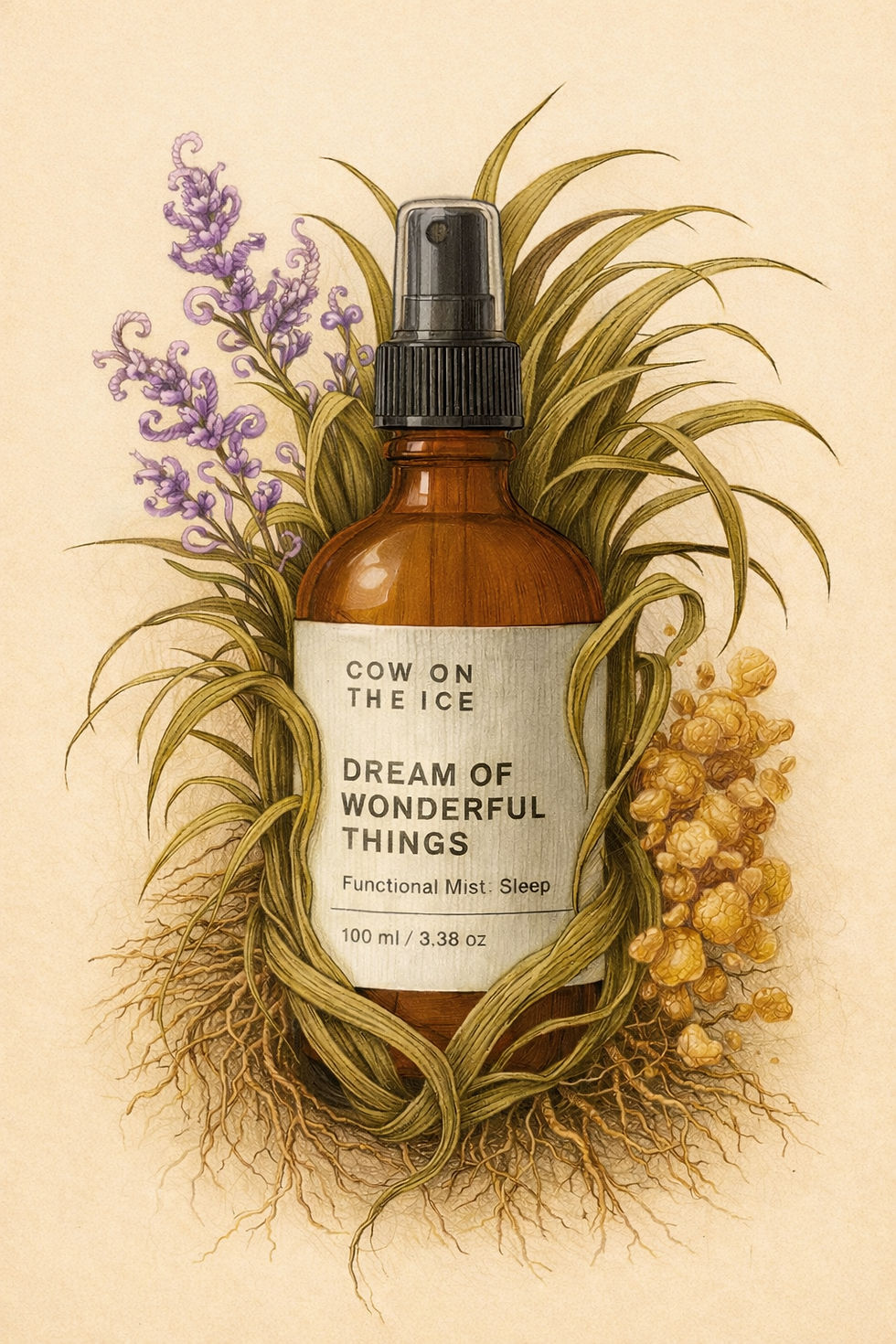
COW ON THE ICE


Comments